

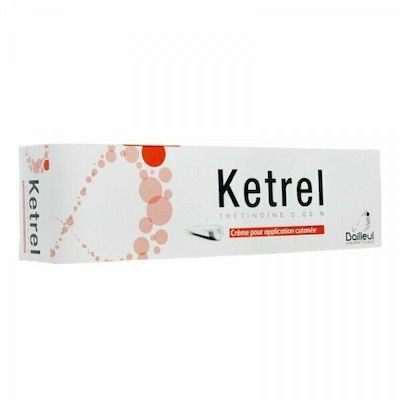
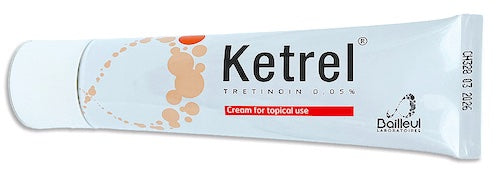
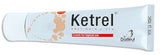
Ketrel 0.05% - Tretinoin Cream
- £129.00
- £129.00
- Unit price
- per
PRODUCT INFORMATION
xKetrel 0.05% Tretinoin Cream is a topical prescription retinoid supplied in a 30g tube. Each gram of cream contains 0.5mg of tretinoin, equivalent to a concentration of 0.05%.
Ketrel is principally used for acne, including comedonal and mixed forms of acne. Tretinoin may also be prescribed off-label for other medically assessed concerns involving uneven pigmentation, rough skin texture and signs of photoageing.
Ketrel 0.05% product information
- Product: Ketrel cream
- Active ingredient: Tretinoin
- Strength: 0.05% w/w
- Equivalent concentration: 0.5mg of tretinoin per gram of cream
- Formulation: Topical cream
- Pack size: 30g tube
- Manufacturer: Laboratoires Bailleul
- Medicine class: Topical retinoid
- Primary indication: Acne
Indication: acne and comedonal skin
The Ketrel product information lists the treatment of different forms of acne, excluding acne rosacea. These include acne vulgaris, mixed or polymorphic acne and acne in which microcomedones are prominent.
Comedones develop when dead skin cells and sebum accumulate inside a hair follicle. Closed comedones are commonly described as whiteheads, while open comedones are commonly described as blackheads. Microcomedones are the smaller precursor lesions from which visible acne lesions can develop.
Ketrel may be prescribed as an individual treatment or as one part of a wider acne-management plan. The appropriate combination and application schedule depend on the type of acne, other skincare products and individual skin tolerance.
How tretinoin 0.05% works
Tretinoin is all-trans retinoic acid, an active form of vitamin A. It interacts directly with retinoic acid receptors in the skin and helps regulate the way skin cells develop and are shed.
In acne treatment, topical tretinoin helps normalise follicular keratinisation, reduce the formation of microcomedones and support the clearance of existing comedones. This addresses an important process involved in the development of blackheads, whiteheads and subsequent inflammatory acne lesions.
Ketrel for photoageing and pigmentation
Topical tretinoin also has established clinical use in photoaged skin. It may be prescribed under medical supervision for concerns such as fine lines, rough texture, uneven skin tone and mottled pigmentation.
These are broader clinical uses of topical tretinoin and are not listed as the principal authorised indication in the Ketrel product leaflet. When Ketrel is prescribed for photoageing or pigmentation, that use is therefore considered off-label and should be based on an individual clinical assessment.
How to use Ketrel 0.05% cream
Use Ketrel only according to the application schedule provided by the prescribing clinician. The manufacturer’s product information describes an initial schedule of one application in the evening, with frequency adjusted according to skin response and tolerance.
- Cleanse the treatment area gently and allow the skin to dry completely.
- Apply a thin layer of Ketrel to the areas being treated.
- Avoid the eyes, eyelids, lips, nostrils, mucous membranes and broken or sunburned skin.
- Wash the hands after applying the cream.
- Use an appropriate broad-spectrum sunscreen during the day and limit unnecessary ultraviolet exposure.
Applying a larger amount or using Ketrel more frequently than directed does not improve the treatment result. It can instead increase redness, peeling, burning and other local reactions.
Introducing Ketrel into a skincare routine
Tretinoin 0.05% can cause irritation, particularly during the first month of treatment. A prescriber may therefore recommend beginning with less frequent applications and increasing the frequency only if the skin tolerates treatment.
Other potentially irritating products may need to be reduced, separated from Ketrel or temporarily discontinued. These can include exfoliating acids, scrubs, alcohol-based products, other retinoids and strongly fragranced skincare. The routine should be agreed with the prescribing clinician rather than combining active treatments without guidance.
A simple moisturiser may be used to support the skin barrier where appropriate. The prescriber can advise whether it should be applied before or after Ketrel based on the treatment plan and level of sensitivity.
Expected treatment progression
The Ketrel patient information leaflet describes the first month as the period in which skin is most susceptible to irritation. Temporary redness, moderate flaking, mild burning or the appearance of small pustules may occur during the early stages.
The leaflet describes visible clinical improvement at approximately six weeks on average, with fuller assessment commonly taking place after approximately 12 to 14 weeks. These are general product-information timescales rather than guaranteed results. Response varies according to the indication, application frequency, accompanying routine and individual skin tolerance.
A temporary increase in blemishes can occur during early acne treatment as existing microcomedones progress towards the skin surface. Significant, painful or persistent worsening should be reviewed rather than automatically assumed to be a normal adjustment.
Possible side effects
Local skin reactions associated with Ketrel and topical tretinoin can include:
- Redness or erythema
- Dryness and flaking
- Warmth, stinging or burning after application
- Skin tenderness or increased sensitivity
- Temporary irritation during the initial treatment period
- Increased susceptibility to irritation from sunlight and ultraviolet exposure
Application frequency may need to be reduced if irritation becomes troublesome. Treatment should be stopped and clinical advice obtained if there is severe inflammation, blistering, swelling, crusting, a suspected allergic reaction or another unexpected reaction.
Sun exposure during tretinoin treatment
Ultraviolet exposure should be limited while using Ketrel. Use suitable broad-spectrum sun protection and avoid deliberate tanning or sunbeds. Ketrel should not be applied to sunburned skin; treatment should be restarted only after the skin has recovered and in accordance with clinical advice.
Pregnancy and breastfeeding
Ketrel must not be used during pregnancy or when planning a pregnancy. The manufacturer’s information does not recommend its use while breastfeeding. These circumstances should be disclosed during consultation before treatment is prescribed.
Formulation and ingredients
Each gram of Ketrel cream contains 0.5mg of tretinoin. The manufacturer’s leaflet also lists isopropyl myristate, carbomer, polysorbate 80, glycerol, liquid paraffin, butylated hydroxytoluene, butylated hydroxyanisole, methyl parahydroxybenzoate, propyl parahydroxybenzoate, sodium hydroxide and purified water among the formulation ingredients.
Some excipients can cause local skin reactions or delayed allergic reactions. Any known allergy or previous reaction to tretinoin, parabens, polysorbates or another ingredient should be disclosed during consultation.
Storage
Store Ketrel below 25°C and retain it in its original packaging to protect it from light. Keep the tube closed when it is not being used and do not use it after the expiry date printed on the packaging.
Ketrel 0.05% FAQs
Is Ketrel the same as tretinoin?
Ketrel is a brand of topical tretinoin cream. The active ingredient in Ketrel 0.05% is tretinoin at a concentration of 0.5mg per gram.
Is Ketrel 0.5% or 0.05%?
Ketrel contains 0.5mg of tretinoin per gram of cream, which is equivalent to 0.05%. It is sometimes incorrectly described online as “Ketrel 0.5%” because the 0.5mg/g measurement is misread as a percentage.
Is Ketrel a cream or a gel?
This Ketrel product is a cream. It should not be confused with tretinoin gel formulations, which have a different vehicle and may feel or behave differently on the skin.
What is Ketrel cream used for?
Ketrel is principally used for acne, including acne vulgaris, mixed acne and forms in which comedones or microcomedones are prominent. A clinician may also prescribe topical tretinoin off-label for selected pigmentation, texture or photoageing concerns.
Can Ketrel treat rosacea?
Rosacea is specifically excluded from the acne indications listed in the Ketrel product information. Redness or facial spots should not be assumed to be acne without an appropriate assessment.
Is Ketrel the same as retinol?
No. Retinol is a cosmetic vitamin A derivative that must undergo conversion within the skin. Tretinoin is retinoic acid itself and acts directly at retinoic acid receptors. It is a prescription medicine rather than an over-the-counter retinol product.
How does Ketrel 0.05% compare with tretinoin 0.025% and 0.1%?
Ketrel 0.05% is a middle concentration between commonly prescribed 0.025% and 0.1% tretinoin creams. A higher percentage is not automatically more appropriate or more effective for an individual. The choice depends on the indication, previous retinoid exposure and ability to tolerate irritation.
Is Ketrel the same as Obagi tretinoin 0.05%?
Both products contain tretinoin at 0.05%, but they are different branded formulations produced by different manufacturers. Their cream vehicles and excipients are not necessarily identical.
When should Ketrel be applied?
The manufacturer’s instructions begin with one application in the evening. The prescribing clinician may alter the frequency according to the indication, response and level of irritation.
How long does Ketrel take to work?
The Ketrel leaflet describes visible improvement at approximately six weeks on average and fuller results after approximately 12 to 14 weeks. These timings vary and should not be treated as guaranteed outcomes.
Does Ketrel cause purging?
A temporary appearance of small pustules or increased blemishes can occur during the first few weeks of acne treatment. This does not happen to everyone. Marked, painful or persistent worsening should be assessed by the prescribing clinician.
Can Ketrel be used with exfoliating acids or retinol?
Combining tretinoin with other retinoids, exfoliating acids or irritating products can increase redness and barrier disruption. These combinations should only be used when they form part of the prescribed skincare plan.
Can Ketrel be used every night?
Once-nightly application is described in the manufacturer’s information, but some people require a slower introductory schedule. Use the individual frequency specified by the prescriber rather than increasing applications independently.
Is Ketrel available without a prescription in the UK?
No. Ketrel is a prescription-only medicine and requires consultation before it can be prescribed.
- Choosing a selection results in a full page refresh.