

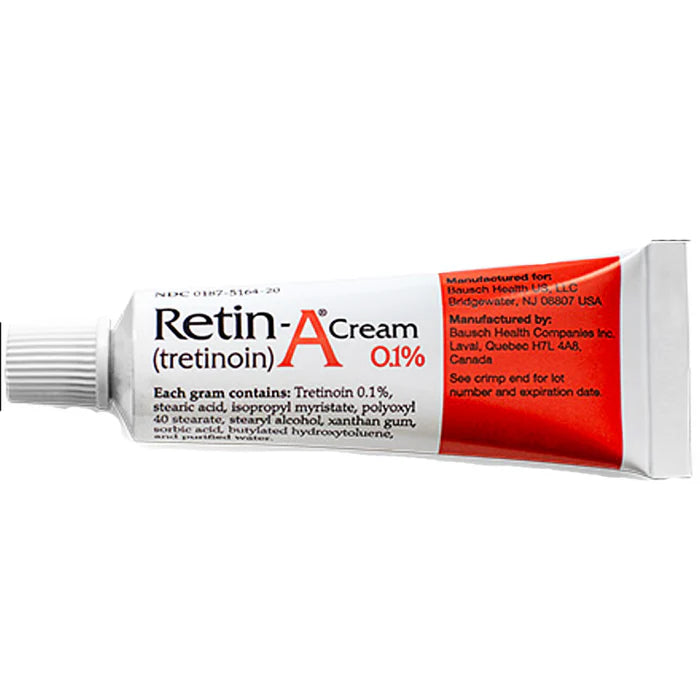
Retin-A 0.1% Tretinoin Cream – 20g
- £150.00
- £150.00
- Unit price
- per
PRODUCT INFORMATION
xRetin-A 0.1% Tretinoin Cream is a high-strength topical retinoid supplied in a 20g tube. It contains 0.1% tretinoin, equivalent to 1mg of tretinoin per gram of cream, and is indicated for the topical treatment of acne vulgaris.
Retin-A is a specific branded tretinoin formulation from Bausch Health. Retin-A 0.1% Cream is not the same branded product as Retirides 0.1% Cream and should not be confused with Retin-A Micro, which uses a different gel-based delivery system.
Product information
- Product: Retin-A Cream
- Active ingredient: Tretinoin
- Strength: 0.1% w/w, equivalent to 1mg tretinoin per gram
- Form: Hydrophilic topical cream
- Pack size: 20g tube
- Indication: Topical treatment of acne vulgaris
- Brand: Retin-A
- Manufacturer: Bausch Health
Indication
Retin-A 0.1% Cream is indicated for acne vulgaris. Depending on the individual presentation, acne may include open comedones (blackheads), closed comedones (whiteheads), papules and pustules.
Tretinoin affects the way cells develop and are shed within the pilosebaceous unit. It reduces the cohesion of follicular epithelial cells and promotes cellular turnover, helping to reduce the formation of microcomedones and support the extrusion of existing comedones.
Tretinoin 0.1% strength
Retin-A cream is manufactured in 0.025%, 0.05% and 0.1% concentrations. The 0.1% formulation is the highest-strength Retin-A cream in this range. A higher concentration is not automatically more appropriate or more effective for every person, as suitability also depends on previous retinoid use, skin tolerance, the condition being treated and the prescribed treatment plan.
Retin-A 0.1% Cream may be considered where a clinician determines that this concentration is appropriate. People who are new to topical retinoids may be more likely to experience irritation when beginning with a higher-strength formulation.
Formulation
Retin-A 0.1% is a hydrophilic cream containing tretinoin in a cream vehicle. The inactive ingredients listed for Retin-A cream are stearic acid, isopropyl myristate, polyoxyl 40 stearate, stearyl alcohol, xanthan gum, sorbic acid, butylated hydroxytoluene and purified water.
The official inactive-ingredient list does not include added fragrance. However, individual sensitivities can occur with active or inactive ingredients, and the complete formulation should be considered when assessing suitability.
How Retin-A 0.1% Cream is applied
Use Retin-A exactly as prescribed. The official product directions describe once-daily application before bedtime, although a prescriber may recommend a different schedule according to individual tolerance and treatment requirements.
- Wash the treatment area gently with a mild cleanser and pat the skin dry.
- Allow the skin to dry completely. The product information advises waiting approximately 20 to 30 minutes after cleansing before application.
- Apply a small amount in a thin layer over the prescribed treatment area.
- For the whole face, approximately half an inch of cream or less should normally be sufficient. The cream should become invisible shortly after it is spread over the skin.
- Avoid the eyes, eyelids, lips, corners of the nose, mucous membranes and broken, eczematous or sunburned skin.
- Wash the hands after application.
Applying a larger amount or using Retin-A more frequently will not produce faster results and may increase redness, peeling and discomfort. People with sensitive skin may be instructed to begin with application on alternate nights before increasing frequency.
What to expect during treatment
Dryness, redness, peeling, warmth, stinging or mild burning can occur, particularly during the early stages of treatment. Irritation often becomes most noticeable during the first two to four weeks and may reduce as the skin adjusts.
Some people notice an apparent increase in inflammatory spots during the first three to six weeks. This can occur as previously forming lesions progress towards the surface and is sometimes informally described as “purging”. It should be distinguished from severe or persistent irritation.
Visible improvement is gradual. The Retin-A product information states that continued improvement may be expected over approximately 6 to 12 weeks, with many patients showing improvement by 12 weeks. Individual response times vary, and continued use should be reviewed according to the prescribed treatment plan.
Moisturiser and sunscreen
A non-comedogenic moisturiser may be used to help manage dryness and support skin comfort. Depending on tolerance, moisturiser can be applied before or after tretinoin, but the treatment should be used according to the instructions provided by the prescriber.
Tretinoin-treated skin may be more susceptible to environmental irritation. Exposure to sunlight and artificial ultraviolet light should be minimised, and a broad-spectrum sunscreen and protective clothing should be used during the day. Retin-A should not be applied to sunburned skin until it has recovered. Wind and cold weather may also increase irritation.
Using Retin-A with other skincare products
Care is required when Retin-A is used alongside other topical products that may dry or irritate the skin. These may include exfoliating acids, abrasive cleansers, alcohol-based products, astringents, benzoyl peroxide, salicylic acid, sulphur and resorcinol.
This does not necessarily mean that such ingredients can never be included in the same overall skincare routine. A prescriber may recommend separating products by time of day, reducing application frequency or introducing one active product at a time.
Clinical information
Tretinoin is a topical retinoid derived from vitamin A. Its precise mechanism in acne is not completely defined, but clinical and laboratory evidence indicates that it alters follicular epithelial cell behaviour, reduces the formation of microcomedones and increases the turnover and extrusion of comedonal material.
Although topical tretinoin has also been studied in relation to photoageing and uneven pigmentation, the labelled indication for Retin-A Cream is acne vulgaris. Any use for another condition is an off-label clinical decision and requires individual assessment.
Important information
Retin-A 0.1% Cream should not be applied to the eyes, mouth, mucous membranes, open wounds, eczematous skin or areas affected by sunburn. If severe or persistent redness, swelling, blistering, crusting or discomfort develops, stop applying the product and seek advice from the prescriber.
Temporary changes in skin pigmentation have been reported with topical tretinoin. These may include areas becoming lighter or darker during treatment.
Topical retinoids must not be used during pregnancy or when planning a pregnancy. Anyone who becomes pregnant during treatment should stop using the product and contact their prescriber. Use while breastfeeding also requires individual clinical review.
Storage
Keep the tube securely closed and store Retin-A Cream below 27°C. Keep it out of the sight and reach of children and do not use it beyond the stated expiry date.
Retin-A 0.1% Cream FAQs
What is Retin-A?
Retin-A is a branded topical medicine containing tretinoin, a prescription retinoid. Retin-A Cream is indicated for the topical treatment of acne vulgaris.
Is Retin-A the same as tretinoin?
Retin-A is a brand of tretinoin. Tretinoin is the active ingredient, while Retin-A refers to a particular branded formulation and cream vehicle.
How much tretinoin is in Retin-A 0.1% Cream?
Retin-A 0.1% contains 1mg of tretinoin in each gram of cream. A concentration of 0.1% does not mean that the cream contains 1% tretinoin.
Is Retin-A 0.1% the strongest Retin-A cream?
Yes. The Retin-A cream range includes 0.025%, 0.05% and 0.1% strengths, making 0.1% the highest cream concentration in that range.
What is the difference between Retin-A 0.1% and Retirides 0.1%?
Both products contain tretinoin at a concentration of 0.1%, but they are different branded medicines with different manufacturers and cream vehicles. Their inactive ingredients and texture are not identical, so they should not be treated as interchangeable without clinical guidance.
What is the difference between Retin-A 0.1% and Retin-A Micro?
Retin-A 0.1% Cream is a conventional hydrophilic cream formulation. Retin-A Micro is a separate microsphere gel product designed to release tretinoin through a different delivery system.
Is Retin-A 0.1% stronger than Retin-A 0.05%?
Retin-A 0.1% contains twice the concentration of tretinoin found in the 0.05% cream. This does not mean it will be the most suitable strength for every person, and higher concentrations may cause more irritation.
How often is Retin-A 0.1% applied?
The official directions describe application once daily before bedtime. A prescriber may recommend alternate-night or less frequent application, particularly while the skin adjusts.
How long does Retin-A take to work?
Response times vary. Early irritation may occur during the first two to four weeks, and continued improvement in acne may develop over approximately 6 to 12 weeks. Treatment should be assessed over time rather than after only a few applications.
Can Retin-A initially make acne appear worse?
An apparent increase in spots can occur during the first three to six weeks as previously forming lesions reach the surface. Severe, worsening or persistent inflammation should be discussed with the prescriber.
Can moisturiser be used with Retin-A?
Yes. A suitable non-comedogenic moisturiser can help manage dryness and irritation. Its placement before or after tretinoin may be adjusted according to tolerance and clinical instructions.
Can Retin-A be used for photoageing or pigmentation?
Tretinoin has been clinically studied for photoaged skin and pigmentation concerns. However, the labelled indication for Retin-A Cream is acne vulgaris, so treatment for another condition is an off-label decision requiring individual assessment.
Does Retin-A require a prescription in the UK?
Yes. Tretinoin is a prescription-only medicine in the UK and requires an appropriate consultation and prescription before it can be supplied.
```- Choosing a selection results in a full page refresh.