
Complete OBAGI Nu-Derm Routine: Step-by-Step Guide for Beginners

The OBAGI Nu-Derm System is a multi-step prescription skincare protocol designed to treat hyperpigmentation, sun damage, uneven tone, and signs of photoageing at a cellular level. It combines hydroquinone 4% (prescription-only) with tretinoin and supporting products in a structured morning and evening regimen. This guide covers the full routine, what to expect, and how to manage the adjustment period.
The OBAGI Nu-Derm System contains prescription-only ingredients including hydroquinone 4% and tretinoin. A medical assessment is required before purchase. This article is for educational purposes only. Always follow the guidance of your prescribing clinician.
The morning routine
- Step 1 — Cleanser: OBAGI Nu-Derm Gentle Cleanser (normal to dry skin) or Foaming Gel (normal to oily skin). Massage gently for 30–60 seconds with lukewarm water, rinse thoroughly, pat dry.
- Step 2 — Toner: Apply Nu-Derm Toner to a cotton pad and sweep across face and neck. Allow to dry completely before the next step.
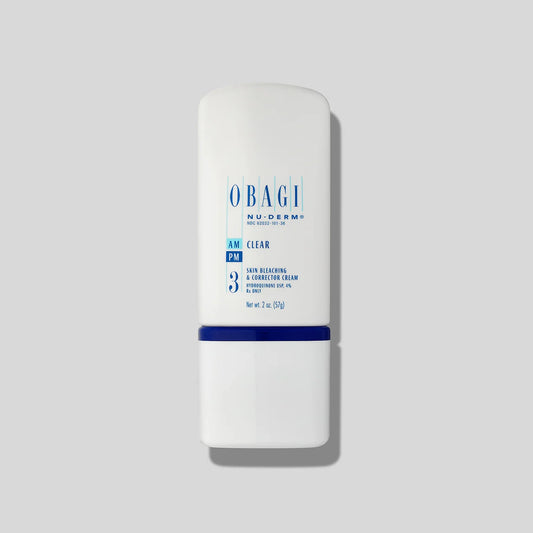
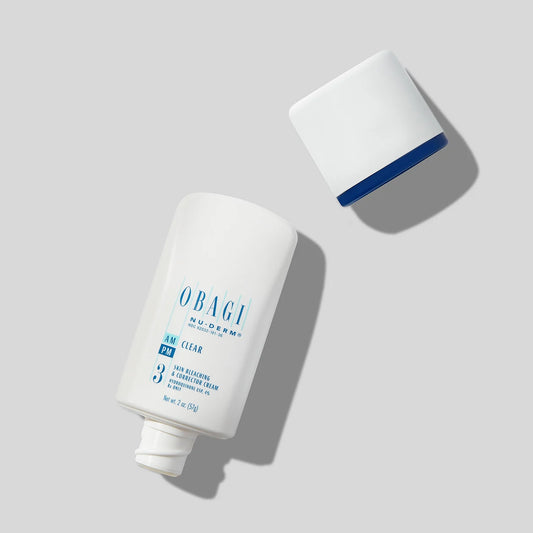
- Step 3 — Clear (hydroquinone 4%): Apply to areas of hyperpigmentation or across the entire face. Avoid the eye area.
- Step 4 — Exfoderm or Exfoderm Forte: Exfoderm for normal to dry skin; Exfoderm Forte for normal to oily skin. Apply a thin layer and allow to absorb fully.
- Step 5 — Blender (hydroquinone 4%): Apply across the entire face and neck.
- Step 6 — Sun Shield SPF 50: Apply generously as the final morning step. Reapply every 2 hours if outdoors. This step is non-negotiable — hydroquinone and tretinoin both increase photosensitivity.
The evening routine
- Step 1 — Cleanser: As per the morning routine. Double cleanse if wearing sunscreen.
- Step 2 — Toner: As per the morning routine.
- Step 3 — Clear (hydroquinone 4%): As per the morning routine.
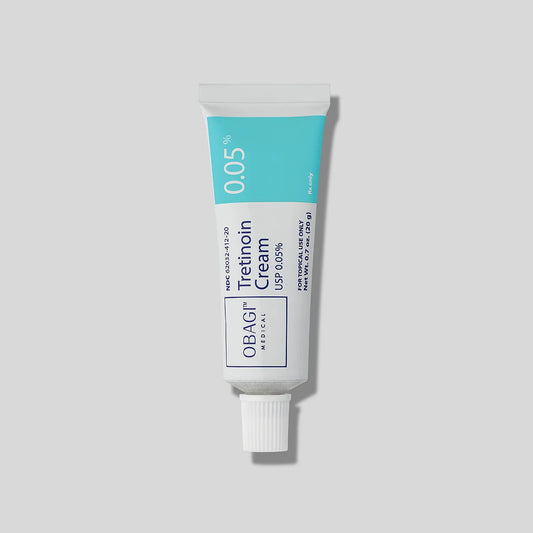
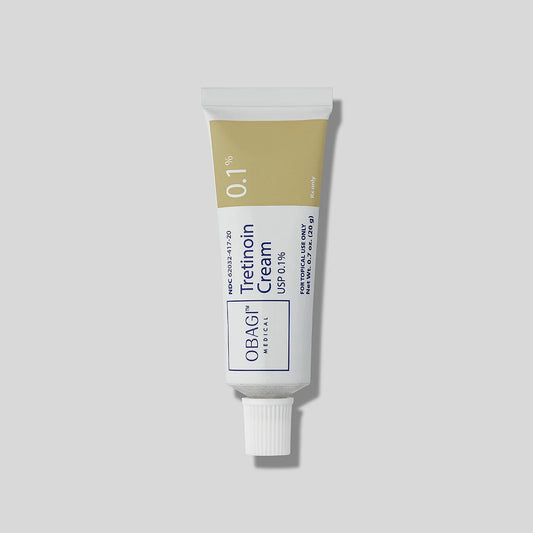
- Step 4 — Tretinoin: Apply a pea-sized amount to the entire face after skin is completely dry — wait 20–30 minutes after cleansing. Avoid the eye area and lips. Your prescriber will advise on the appropriate strength (typically 0.025% or 0.05% to start). See our guide to tretinoin strengths for a full comparison.
- Step 5 — Blender (hydroquinone 4%): Apply over tretinoin, spreading evenly across face and neck.
- Step 6 — Hydrate or Hydrate Luxe: Obagi Hydrate for normal to oily skin; Hydrate Luxe for normal to dry skin. Apply generously, particularly during the adjustment period.
What to expect: the timeline
Weeks 1–6 — Adjustment phase: Redness, dryness, peeling, and a temporary increase in breakouts are common and expected. This reflects accelerated cell turnover — the skin is shedding damaged cells. Pigmentation may temporarily appear darker before it begins to fade. Consistency is important during this phase.
Weeks 6–12 — Transition phase: Irritation begins to subside as tolerance builds. Improvements in texture and tone become visible. Dark spots begin to fade.
Weeks 12–18 — Results phase: Significant improvements in hyperpigmentation, skin texture, fine lines, and overall tone become apparent. Most users see meaningful results by 18 weeks of consistent use.
Key application principles
- Apply all products to completely dry skin — moisture significantly increases penetration and irritation
- Use a pea-sized amount of tretinoin for the entire face — more does not improve results
- Use 3–4 drops of Clear and Blender — do not over-apply
- Tretinoin is for evening use only
- Do not add other active ingredients (AHAs, BHAs, additional vitamin C) during the active treatment phase — the system is comprehensive and additional actives increase irritation without improving results
- If hydroquinone product turns brown or orange, it has oxidised — replace it
Managing irritation
If irritation becomes severe, reduce tretinoin frequency temporarily — discuss with your prescriber before making changes. Buffering (applying Hydrate moisturiser before tretinoin) reduces intensity and is a reasonable strategy during the early adjustment period. Do not stop the system during the adjustment phase without prescriber guidance. See our beginner's guide to starting tretinoin for full guidance on managing the adjustment period.
Hydroquinone cycling
Hydroquinone should not be used continuously for more than 4–6 months. After completing the active treatment phase, take a 2–3 month break from hydroquinone. During this period, OBAGI Clear FX (arbutin 7%) can be used in place of Clear to maintain brightening progress. See our guide to OBAGI Clear vs Clear FX for more detail.
Maintenance after Nu-Derm
- Continue tretinoin at a maintenance frequency (typically 3–5 nights per week) as advised by your prescriber
- Take a 2–3 month break from hydroquinone, then cycle back if pigmentation returns
- Maintain daily SPF 50
- Obagi Professional-C Serum (10% or 15%) can be added to the morning routine for ongoing antioxidant protection and brightening — see our Obagi Professional-C Serum guide for strength recommendations
Who the Nu-Derm system is suited to
The Nu-Derm system is appropriate for those with moderate to severe hyperpigmentation, melasma, or sun damage who are committed to a structured daily regimen and can tolerate a meaningful adjustment period. It is not appropriate during pregnancy or breastfeeding (due to both hydroquinone and tretinoin), and requires a medical assessment before starting. See our guide to buying tretinoin in the UK for information on how to access prescription treatment legally.
When to contact your prescriber
- Severe or persistent irritation that does not improve with reduced frequency
- Signs of allergic reaction (hives, swelling, severe redness)
- Worsening hyperpigmentation after 12 weeks of consistent use
- Blue-black skin discolouration (possible ochronosis — stop immediately)
- Any uncertainty about whether to continue or adjust treatment
Frequently asked questions
Do I need a prescription for the Nu-Derm system?
Yes — the Nu-Derm system contains hydroquinone 4% (Clear and Blender) and is used alongside prescription tretinoin. Both are prescription-only medicines in the UK. A medical assessment is required before purchase.
How long does the Nu-Derm system take to work?
Most users see meaningful improvements in hyperpigmentation and skin tone by 12–18 weeks of consistent use. The adjustment phase (weeks 1–6) involves temporary worsening before improvement begins. Full results develop over 18–24 weeks.
Why does my pigmentation look darker when I start?
Temporary darkening of pigmentation in the early weeks is a recognised response as surface melanin is brought up through accelerated cell turnover. It is not a sign that the treatment is worsening your pigmentation. If darkening persists beyond 8 weeks, contact your prescriber.
Can I use other active ingredients alongside Nu-Derm?
Not during the active treatment phase. The system is comprehensive — adding AHAs, BHAs, or additional vitamin C increases irritation without improving results. Your prescriber will advise on when and how to reintroduce other actives.
What is the difference between Exfoderm and Exfoderm Forte?
Exfoderm is formulated for normal to dry skin; Exfoderm Forte for normal to oily skin. Both contain phytic acid for gentle exfoliation and are used in the morning routine only.
What happens after I finish the Nu-Derm treatment phase?
Most prescribers recommend transitioning to a maintenance routine — continuing tretinoin at a reduced frequency, cycling off hydroquinone for 2–3 months, and maintaining daily SPF 50. OBAGI Clear FX (arbutin) can be used during the hydroquinone break to maintain brightening progress.